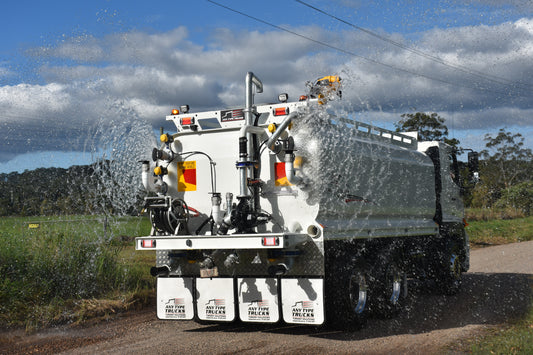

Water cannons are one of the most variable components in a water truck build. The right drive system — electric, pneumatic, or hydraulic — depends on your application, your site conditions, and how the truck will be operated day to day. There's no single answer that suits every fleet.
Here's how we think through the options with operators across Queensland when speccing a cannon system.
This article is general context only. The right cannon configuration for your build depends on your specific operational requirements — we work through those directly with you.
Electric Water Cannons
Electric cannons run off the vehicle's 12V or 24V DC system. They're straightforward to install and operate, with switch or remote actuation. For civil works and road crew applications where throw distance and output volume are moderate, they're a commonly specified option.
The simplicity of installation is a genuine advantage for fleet operators who want to keep build cost down and avoid the complexity of hydraulic plumbing or compressed air systems. Electric cannons are also the easiest to retrofit or replace on an existing build, which has lifecycle maintenance value.
Maintenance considerations: Electric systems include seals and electrical components that require regular inspection, particularly in wet or dusty operating environments. Proper sealing and routine maintenance are important for longevity in site conditions.
Commonly used for: Civil works, road construction, dust suppression on formed haul roads, urban infrastructure projects, applications where simplicity and ease of operation are priorities.
Pneumatic Water Cannons
Pneumatic cannons use compressed air to drive the system — fewer electronics, which can be an advantage in wet, chemically harsh, or heavily dusty operating environments. The absence of electrical components in the drive mechanism reduces one category of failure risk in those conditions.
The trade-off is that a pneumatic system requires an on-board compressed air supply — either a dedicated compressor or integration with the vehicle's existing air system where available. The air system itself needs maintenance: filters, regulators, and moisture management are ongoing requirements.
Maintenance considerations: Air filters and regulators need regular attention. Response speed is generally slower than hydraulic systems. Compressor maintenance adds to the total service requirement for the vehicle.
Commonly used for: Applications where minimising electronics exposure in the spray zone is a priority, wet work environments, some chemical suppression applications, operators who prefer a simpler drive mechanism for field servicing.
Hydraulic Water Cannons
Hydraulic cannons tap into the vehicle's hydraulic circuit or PTO for high-force, high-speed operation. They're typically specified where throw distance, output volume, or duty cycle demands are at the higher end — mine site dust suppression, remote access operations, firefighting-readiness applications, or builds where the cannon will be running hard under sustained use.
The power output advantage of hydraulic drive is real. For operators who need genuine throw distance or consistent high-volume output across a full shift, hydraulic is the configuration that delivers it. The cost and complexity are the trade-off — hydraulic installation is more involved, and the system requires ongoing hose, fitting, and fluid maintenance.
Maintenance considerations: Hydraulic systems require regular hose and fitting inspection, fluid level and condition monitoring, and attention to seals and connections. The higher initial install cost and maintenance commitment should be weighed against the performance requirements of your application.
Commonly used for: High-volume dust suppression on mine sites, remote access operations in Queensland's resources sector, firefighting-readiness configurations, long throw distance requirements, high duty cycle applications.
Quick Comparison
| Drive Type | Electric | Pneumatic | Hydraulic |
|---|---|---|---|
| Power Source | 12V/24V DC | Compressed air | Hydraulic pump (PTO) |
| Power Output | Moderate | Moderate | High |
| Install Complexity | Low | Medium | High |
| Maintenance Focus | Seals, electrics | Air filters, compressor | Hoses, fittings, fluid |
| Relative Cost | $$ | $$$ | $$$$ |
T-Rex and Magnum — Why Local Supply Matters
Both T-Rex and Magnum are Australian-based water cannon suppliers, which is worth factoring into a specification decision. For fleet operators running equipment across regional Queensland and remote mining operations, parts availability and aftermarket support from a local supplier can make a genuine difference to uptime when something needs attention in the field.
In environments where long lead times on imported parts translate directly to days of lost production, sourcing from suppliers with Australian stock and responsive support is a practical consideration — not just a preference.
Choosing the Right System for Your Build
The right cannon configuration depends on your operating environment, duty cycle, throw distance requirements, and total cost of ownership position — not a single blanket recommendation. We spec cannon systems as part of the broader water truck build conversation, matched to what your operation actually demands.
If you're scoping a new build, upgrading an existing fleet, or reviewing a system that keeps causing problems in the field, our team is happy to work through the options with you.
This article is general information only and does not constitute engineering advice. Cannon configuration decisions should be made in consultation with your builder based on your specific operational requirements.
Any Type Trucks builds custom water trucks with integrated cannon systems for civil, mining, and hire fleet operators across Queensland and Australia. Talk to our team or call 07 5476 8499.